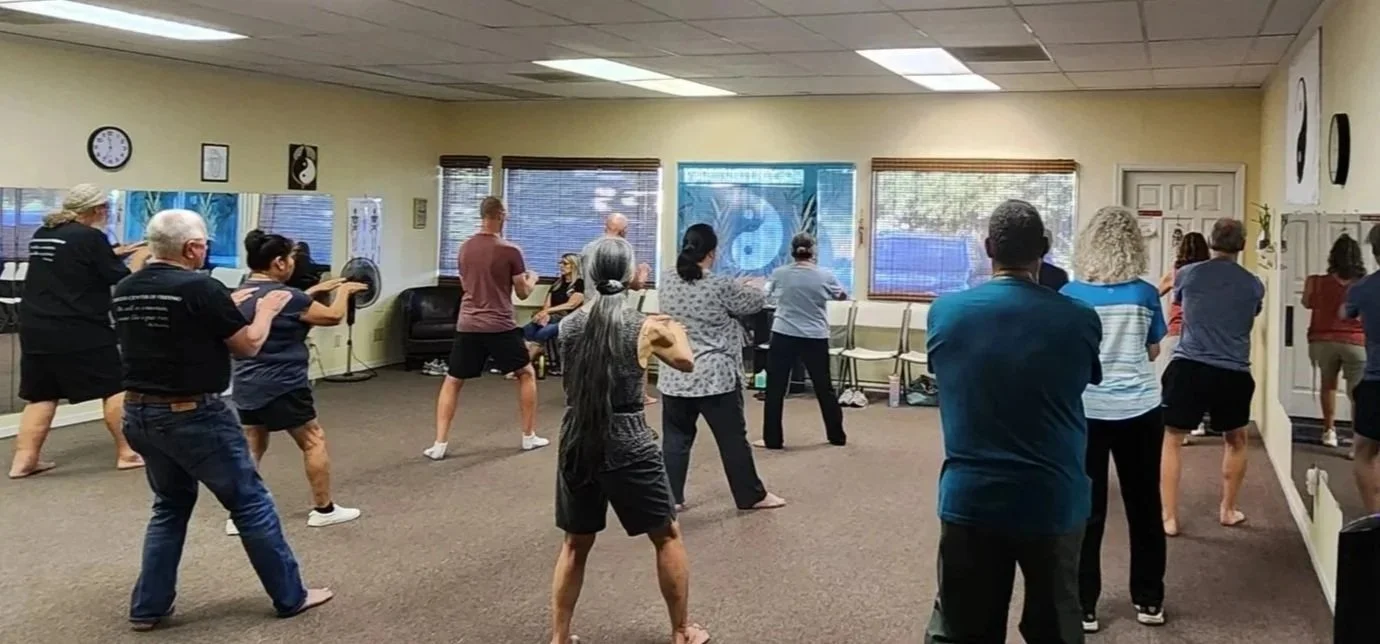
Cultivating community and balance in the heart of Fresno
Traditional Yang Style 37-Movement Tai Chi Chuan was developed by Prof. Cheng Man-ching directly from the Yang Family Style. This martial and holistic art is for everyone, no matter your age or stage of life.
What is Tai Chi Chuan?
People of all ages and backgrounds can benefit from this practice.
Tai Chi Chuan (taijiquan, 太极拳) is a Chinese martial art and holistic exercise practice.
Tai Chi Chuan is more than just slow movement; it is a discipline grounded in centuries-old principles and practice.
Low impact excersise
Strength building
Core and leg strength
Improved balance
Improves sports performance and recovery
Flexibility
Focus
Cognitive improvement
Stress reduction
Moving Meditation
Nervous system regulation
Martial Art
About US
“We're a team of passionate teachers and practitioners, dedicated to teaching the transformative power of Tai Chi Chuan.”
The Tai Chi Center of Fresno is a non-profit organization dedicated to the study and instruction of Tai Chi Chuan as a structured discipline. Our teaching tradition began in Fresno more than fifty years ago; the school has maintained a consistent curriculum based on the Cheng Man-ching tradition.
Instruction is conducted by senior students who have trained extensively within this lineage and continue to refine their understanding through teaching and continued classes.
“Our Center’s culture is built on the foundations of diversity, equity, collective support, and mentoring."
Mission Statement
The Tai Chi Center of Fresno is dedicated to preserving and teaching the art of Tai Chi Chuan (taijiquan, 太极拳), in both theory and practice, for physical well-being and martial skill.
We strive to educate and inspire awareness and appreciation for this ancient Chinese discipline through public demonstrations at fairs, festivals, and community events.
Our goal is to cultivate a welcoming, inclusive, and safe environment where students of all backgrounds and ages can experience the profound benefits of Tai Chi Chuan (taijiquan, 太极拳).
Classes
We offer beginner classes in two separate sessions throughout the year.
Beginner classes begin twice a year and last for a six-month session.
After learning the basic form, you will move on to refinement classes, where you deepen your understanding of Tai Chi and the principles that guide its practice.
Check the link below for detailed class information and schedule.